




Loading...
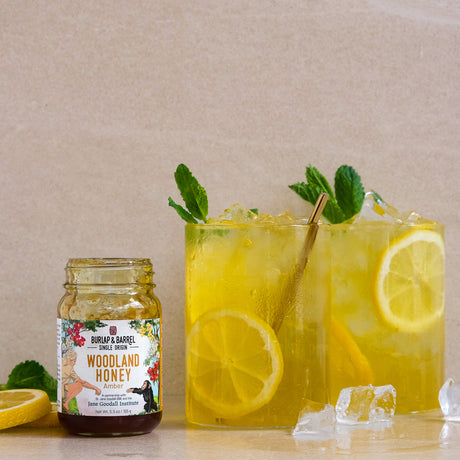
The lightest of the three woodland honeys, with bright citrus and soft floral notes. Drizzle it over yogurt and berries, stir it into tea, or spoon it onto a cheese board next to something soft and creamy. It's the one to reach for when you want the honey itself to be the flavor.
Our woodland honeys, born from a partnership with the late Dr. Jane Goodall and made in ongoing collaboration with The Jane Goodall Institute, are raw, unfiltered and sustainably harvested from the woodlands of Western Tanzania.
A Message from Dr. Jane Goodall
The trio contains:
-
 Floral & citrusy, perfect for tea, glazes & cakes.
 Ingredients:
Honey (Apis mellifera)
 Size: 5.5 oz
 Origin:
Miombo woodlands, Tanzania


- Spoon into tea, coffee and other warm drinks
- Use as a glaze for cookies and cakes
- Eat straight off the spoon!
-
 Rich notes of molasses & dates, perfect for baking, sauces and hot drinks.
Ingredients:
Rich notes of molasses & dates, perfect for baking, sauces and hot drinks.
Ingredients:Honey (Apis mellifera)
Size: 5.5 oz
Origin:Miombo woodlands, Tanzania
- Bake honey cakes and gingerbread
- Stir into spiced teas and coffee drinks
- Whisk into sauces
-
 A sweet & smoky flavor perfect for BBQ sauces, dressings & marinades.
Ingredients:
A sweet & smoky flavor perfect for BBQ sauces, dressings & marinades.
Ingredients:Honey (Apis mellifera)
Size: 5.5 oz
Origin:Miombo woodlands, Tanzania
- Add to barbecue sauces
- Stir into marinades
- Whisk into dressings
Highlights
Origin:
Miombo woodlands, Tanzania
Ingredients
Honey (Apis mellifera)


Cooking tips
- Spoon into tea, coffee and other warm drinks
- Use as a glaze for cookies and cakes
- Eat straight off the spoon!
Recipes


Sourcing

Our woodland honey comes from the Miombo Woodlands of Western Tanzania — one of the most biodiverse landscapes on earth, and the region where Dr. Jane Goodall began her trailblazing chimpanzee research in 1960. "The bees can gather nectar and pollen from over 30 different species of flowering trees, shrubs and grasses," Jane explained. "And this gives their honey really unique flavors." Every jar tastes distinctly of where it came from: raw, unfiltered, and unlike anything on a supermarket shelf.
The Jane Goodall Institute works with local communities to build hives and train beekeepers, creating income that doesn't depend on logging, mining, or hunting. Traditional beekeepers lead the training themselves, teaching harvesters to always leave enough honey for the bees. "Because the bees rely on the biodiversity of the Miombo Woodlands, this provides an incentive for the local communities to protect the environment and its rich diversity of wildlife," Jane said. 5% of the retail price of every jar goes back to JGI's work in Western Tanzania — lasting benefits for the communities and the ecosystems they depend on, and a step toward the greener, more hopeful world Jane spent her life building.
At left: Ethan Frisch, Co-founder of Burlap & Barrel, with Dr. Jane Goodall in Tanzania in 2024
Learn more at janegoodall.org and rootsandshoots.org. Follow @JaneGoodallInst and @RootsAndShoots
